


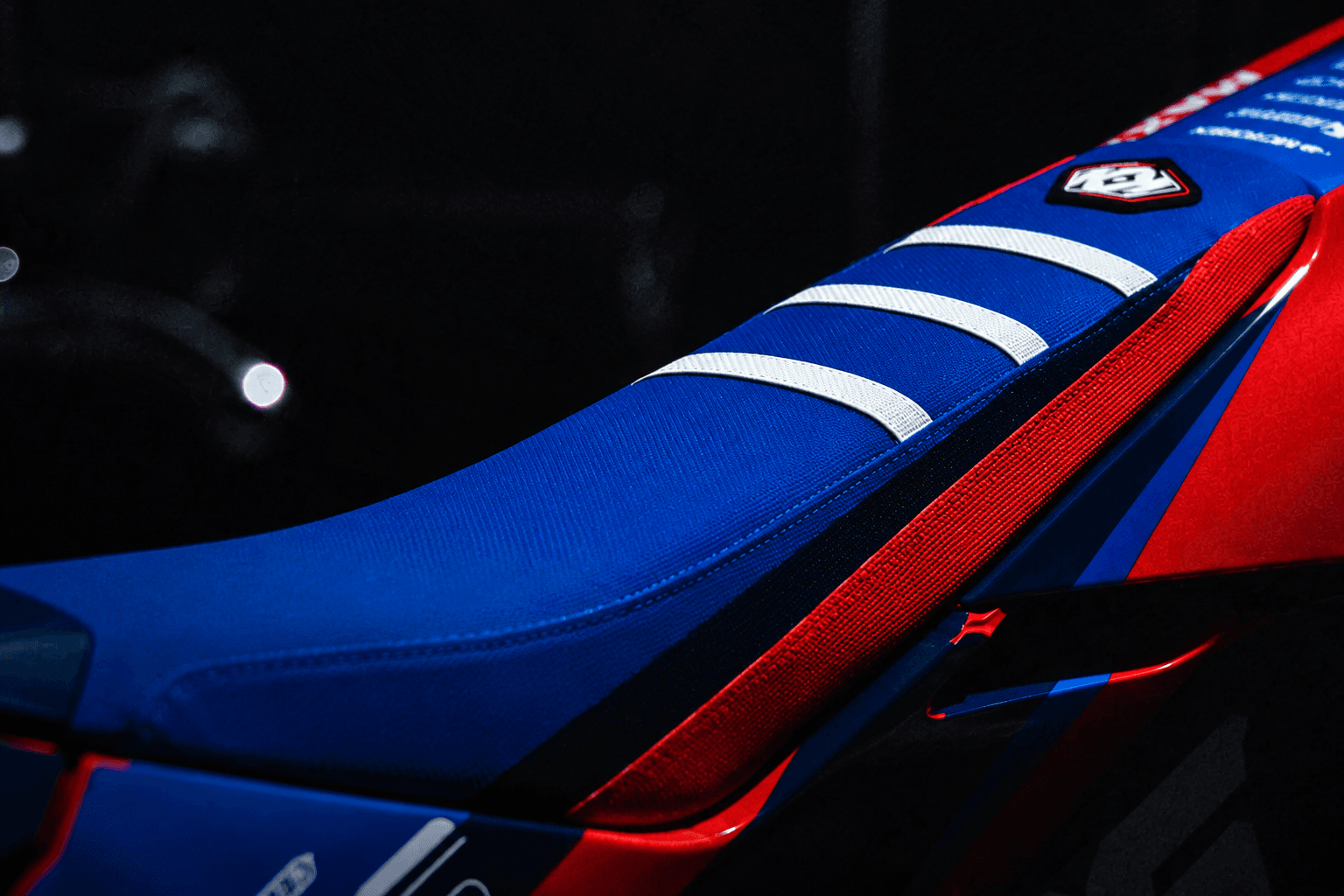
3 Ribs vs 6 Ribs Dirt Bike Seat Covers: What's the Difference and How to Choose? Compare the textures, support and KUTVEK models.
Motocross Seat Cover: 3 Ribs or 6 Ribs, Which One to Choose?
In motocross and enduro, every detail matters to maintain control of your bike. Among often underestimated equipment, the motocross seat cover plays a key role in rider stability, freedom of movement, and bike handling.
But when choosing a new seat cover, one question comes up regularly: should you opt for a 3-rib or 6-rib seat cover?
These two configurations feature different textures, with varying grip and support depending on the rider's position and riding style.
At KUTVEK, we offer various seat covers for off-road bikes, with multiple colours and grip configurations.
Discover how to choose the right model for your riding style.
What's the Difference Between a 3-Rib and 6-Rib Seat Cover?
The term ribs refers to the raised strips on the seat cover. They help improve grip between the rider's gear and the seat, especially during acceleration.
The main difference between the two versions lies in the number of grip strips and their distribution across the seating area.
The 3-Rib Seat Cover: Targeted Support
A 3-rib seat cover has three raised strips.
This configuration is particularly suitable for riders who want extra support while maintaining good freedom of movement on the seat.
It works well for riders who frequently change positions, alternate between sitting and standing, and seek a balance between grip and mobility.
Key Benefits:
- Extra support compared to a flat surface.
- Targeted grip sensation.
- Good freedom of movement depending on the cover's texture.
- A great compromise for motocross and enduro.
The 3-rib cover suits riders looking for extra grip without excessive raised strips.
The 6-Rib Seat Cover: More Grip Zones
The 6-rib seat cover features six raised strips.
This configuration increases contact points with the rider's gear and can provide a more pronounced grip sensation, especially during hard acceleration.
It’s ideal for riders who want to minimize unwanted backward movement while seated.
Key Benefits:
- More evenly distributed grip strips.
- Potentially stronger support sensation.
- Extra stability during acceleration.
- A great choice for riders prioritizing grip.
Note, however, that the number of ribs alone doesn’t determine a cover’s effectiveness. The anti-slip material, seat shape, riding pants, and rider position also play crucial roles.
Comparison: 3-Rib vs. 6-Rib Seat Cover
| Criterion3 Ribs6 Ribs | ||
| Raised Strips | 3 | 6 |
| Grip Sensation | Targeted | Potentially stronger |
| Freedom of Movement | Good balance | Depends on grip and position |
| Usage | Motocross, enduro, recreational | Motocross, enduro, aggressive riding |
| Ideal Rider | Balance of grip/mobility | Prioritizes support |
Our Advice: Choose a 3-rib cover if you want a balance between support and mobility. Opt for a 6-rib if you prefer a stronger grip sensation, especially during acceleration.
The choice is personal: two riders on the same bike may prefer different configurations.
Why Install an Anti-Slip Seat Cover on Your Motocross Bike?
Improve Stability During Acceleration
During acceleration, the rider’s body naturally shifts backward.
An anti-slip seat cover helps limit this movement and maintain the desired position.
The raised strips enhance the cover’s grip.
Enhance Bike Control
In motocross, riders constantly adjust their position: accelerating, braking, cornering, landing jumps, or navigating technical sections.
A seat with proper grip helps stabilize the rider when seated.
However, maintaining enough mobility to move quickly on the bike remains essential.
Replace a Worn-Out Cover
Over time, a seat cover may show signs of wear: smooth surface, tears, weakened seams, or loss of grip.
Replacing the cover restores a proper seating surface and refreshes the bike’s look without replacing the entire seat.
Motocross or Enduro Seat Cover: Should You Choose the Same Grip?
Motocross and enduro have different demands.
Motocross involves repeated acceleration, braking, and position changes, requiring strong rider support.
Enduro’s technical sections may demand more seat movement, especially when overcoming obstacles or quickly regaining footing.
That said, there’s no rule requiring a 3-rib cover for enduro and a 6-rib for motocross.
The best choice depends on your riding style, your need for support, and your preference for freedom of movement.
How to Choose the Right Seat Cover for Your Bike
Before ordering, check these key factors.
1. Make, Model, and Year
Not all seats have the same shape. A cover for a KTM SX-F may not fit a Yamaha YZ-F or Honda CRF.
Always select a cover compatible with your bike’s make, model, and year.
2. Desired Grip Level
If you want extra grip while maintaining mobility, a 3-rib version is a good starting point.
If you prioritize more pronounced grip and support, consider the 6-rib version.
3. Colours and Design
A seat cover also contributes to your bike’s visual identity.
Black, orange, blue, white, or colour combinations: choose a style that matches your bike’s plastics, gear, or graphics kit.
For a cohesive look, pair your seat cover with a KUTVEK motocross graphics kit.
4. Seat Foam Condition
Before replacing the cover, check the foam.
If it’s heavily deformed, torn, or waterlogged, a new cover alone won’t restore proper seating comfort.
KUTVEK Seat Covers: Grip and Customization
At KUTVEK, we offer seat covers for off-road bikes with various grip configurations and colour combinations.
Our goal is to help riders choose a cover that fits their bike and preferences while matching their graphics kit.
Our lineup includes 3-rib and 6-rib options.
Browse available models in our KUTVEK seat cover catalogue.
Want to customize your bike’s look? Check out our motocross graphics kits.
How to Maintain a Motocross Seat Cover
To extend your cover’s lifespan, follow these tips:
- Clean the seat after muddy rides with water and mild soap.
- Use a soft brush to remove dirt between the ribs if needed.
- Avoid harsh solvents that could damage the coating.
- Avoid high-pressure washers near seams and edges.
- Regularly check the cover’s tension and overall condition.
A clean, properly installed cover ensures consistent grip performance.
FAQ: Common Questions About Motocross Seat Covers
What’s the Difference Between a 3-Rib and 6-Rib Seat Cover?
A 3-rib cover has three raised strips, while a 6-rib has six. The six ribs may provide stronger support, while three ribs offer a balance between grip and mobility. The actual feel also depends on materials and rider position.
Which Seat Cover Should I Choose for Motocross?
It depends on your skill level and preferences. An anti-slip cover with ribs helps stabilize your position. The 3-rib suits riders seeking balance, while the 6-rib is for those who want more grip zones.
Is a 6-Rib Seat Cover Always Better?
No. A 6-rib isn’t automatically better than a 3-rib. The number of ribs affects the feel, but material, seat shape, and freedom of movement are equally important.
Can I Use a Motocross Seat Cover for Enduro?
Yes, as long as it fits your bike’s seat. Anti-slip models are also useful in enduro, where both support and mobility matter.
Can I Match My Seat Cover to My Graphics Kit?
Yes. Coordinating colours between the seat cover, plastics, and graphics kit creates a harmonious look. KUTVEK’s various combinations make this easy.
Conclusion: 3 Ribs or 6 Ribs—It’s About Your Riding Style
A motocross seat cover shouldn’t be chosen just for looks. Its grip level, bike compatibility, and feel are crucial.
A 3-rib cover offers a great balance between support and mobility.
A 6-rib cover prioritizes more grip strips and may provide stronger support during acceleration.
In both cases, the best choice depends on your bike and riding style.
Explore KUTVEK seat covers and find the right fit for your motocross or enduro bike.